
Tattoo Placement and Pain: Choosing the Right Spot on Your Body
Adem Hajdarević2026-11-12T09:00:00+00:00Tattoo placement decides more than most people expect. The same design can look calm on a forearm and restless on the ribs, and a needle that feels like a light scratch in one spot can test your patience a few inches away. So when someone writes to me about a tattoo design, one of my first questions is a simple one: where will it go?
This guide covers what I weigh before choosing a spot: why pain changes from area to area, how the body guides a design, what visibility means for work, and how placement affects healing and ageing. The examples come from my own tattoos, and more of that work is on my tattoo page.
Why tattoo pain changes from one area to another
Pain is personal. Sleep and mood change it, and so does your own threshold, which is why I never promise anyone how a spot will feel. Still, the body follows a few patterns, and they are worth knowing before you choose.
Bone close to the surface is the biggest factor. Where little fat or muscle sits between skin and bone, as on the ribs, the shin, the ankle, or the collarbone, the needle feels sharper. Many people describe a buzz that seems to run through the bone itself. Thin skin adds to it, which is why the inner wrist and the inner elbow catch people by surprise. Then come the spots packed with nerve endings, like the hands and the feet.
Fleshy, muscular areas sit at the other end. On the outer upper arm or the outer thigh, the skin has more cushioning underneath, and the feeling is closer to a steady scratch. It still hurts. It is simply easier to sit through for longer.
Tattoo placement pain: a rough map of the body
Here is the rough map I keep in mind. Read it as a general picture, because two people can feel the very same spot in completely different ways.
If you are worried about pain with your first tattoo, a forgiving spot is a sensible start. You learn how your body reacts, and the next choice gets easier. My first tattoo tips cover the rest of what to know before the day of your tattoo.
- Usually gentler: the outer upper arm, the outer forearm, the calf, and the outer thigh.
- Somewhere in between: the upper back and the hip, depending on how close the bone sits to the skin.
- Usually harder: the ribs, the spine, the sternum, and the inner elbow.
- Often the hardest: the hands and feet, the ankles, and the knees.
How the body's flow shapes a tattoo design
A body is not a sheet of paper. It curves and twists, and its muscles stretch and bunch every time you move. My background in graphic design taught me to think about shape first, but a layout that works on a poster can look bent on a shoulder. So I draw with the area in mind and follow its long lines.
Every area has a natural direction. The forearm and the calf run long and vertical, the back is wide and symmetrical, and the hip invites a design that stretches sideways. A tattoo that follows those lines looks like it belongs there, and it keeps its shape when you lift an arm or take a step.
Reading the body: examples from my own tattoos
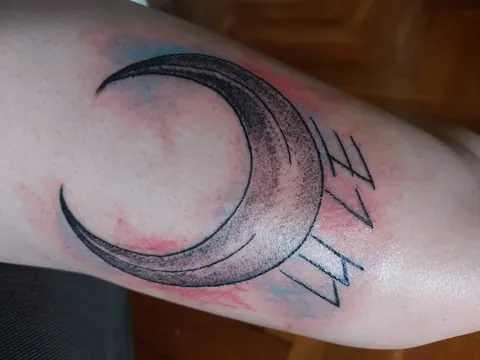
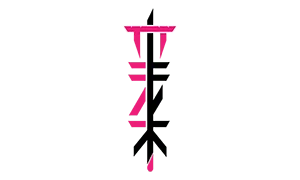
The forearm shows this well. One of mine is a column of Nordic style stave symbols in a single vertical line, with a small sun at one end and a larger circle at the other. Another is a red linework pomegranate, split open and full of seeds. A third is an ornamental elephant with a smaller elephant at its side, covered in mandala patterns and touches of pink, blue, and turquoise. All three sit where the forearm is flattest, so the lines stay clean.
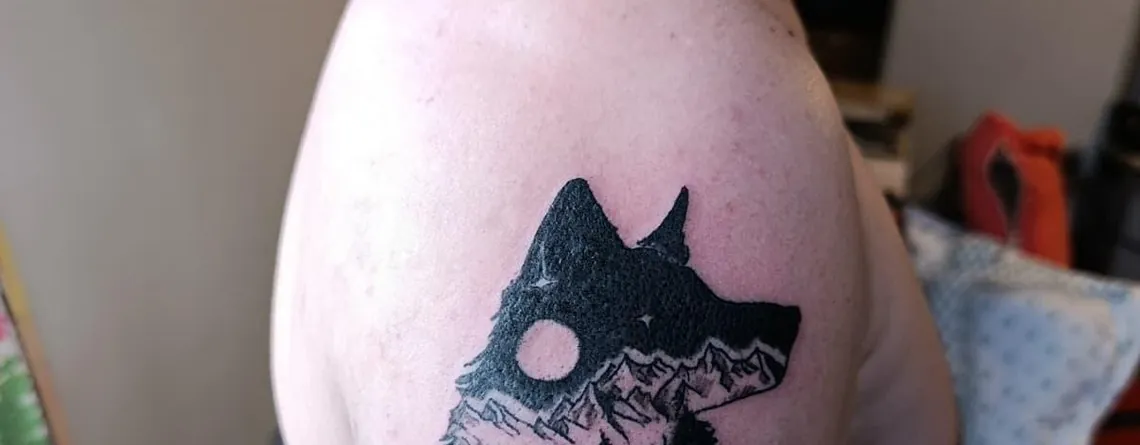
Movement and bold shapes suit the calf and the upper arm. On a calf, I made a colour tattoo of a coiled serpent dragon with olive and gold scales, its body looping down the back of the leg toward the ankle. The long muscle gives the coils room to wind. My wolf head on an upper arm is solid blackwork: a strong silhouette filled with mountains, a pine forest, a full moon, and a winding path.
Larger areas open other options. On a back, I tattooed a skeletal figure under long feathered wings that arch down on both sides, a centred, mirrored composition that needs a wide surface. Script reading pursuit of happiness runs along the side of the chest, following the curve of the ribs. And on a hip, a woman lies across the back of a walking black panther, a scene that stretches sideways just as the hip does.
Visibility, work, and everyday life
Visibility is a practical question, and only you know where you stand. Some workplaces and families are relaxed about tattoos, and some are not. A forearm or hand tattoo is on show most of the year. The back, ribs, hip, and thigh stay covered unless you decide otherwise, and most sleeves hide the upper arm.
Think, too, about how often you want to see it yourself. A forearm piece is one you will look at every day. A back piece is mostly for other people and the mirror. Neither choice is wrong.
How placement affects healing and ageing
Where a tattoo sits also changes how it heals. Healing time depends on the size of the tattoo and its location, and small pieces on the arms usually settle faster than large work across the chest or back. Whatever the area, follow the aftercare instructions of the artist who tattooed you, and see a doctor if you notice signs of infection or an allergic reaction. My tattoo aftercare guide covers healing step by step.
Friction comes next. Waistbands rub the hip, straps press on the ribs, and shoes rub the feet. While a tattoo heals, loose and breathable clothing over it helps, because constant rubbing irritates fresh skin. Moles deserve a thought too: ask for the design to work around them, so you and your doctor can still see if they change.
Over the years, sunlight wears a tattoo down, since UV light fades some tattoo inks, so a forearm or calf that sees summer daylight needs sun protection once healed. Hands and feet are a separate case. That skin gets washed, bent, and rubbed all day, and tattoos on fingers, palms, or the sides of the feet tend to blur and fade sooner than on an upper arm.
Choosing size and style for each area
Size and style have to suit the spot. Fine line work needs room. Very thin lines set close together can merge as the skin ages. A delicate design therefore does better a little larger, on a flat, protected area such as the inner forearm or the upper arm. Bold blackwork works the other way round: it reads from across a room, so it suits the back and the outer arm.
Patterns need an even surface as well. Dotwork and ornamental designs, like the mandala details on my elephant, look sharpest where the skin is flat and does not fold, since rows of dots show every bend.
- Forearm and upper arm: linework, script, and medium ornamental pieces.
- Calf and thigh: larger designs with movement, colour included.
- Back and hip: wide compositions, symmetry, and solid black areas.
- Hands and feet: simple, bold shapes with open space between the lines.
A spot your tattoo can call home
No spot is right for everyone. A slightly harder area can still be the right choice when the design needs its shape. And an easy area is no gift if you end up hiding the tattoo for years. The sting passes. The placement stays.
To see how different areas carry different styles, browse the gallery, where my tattoos come first. If you have an idea and are not sure where it belongs, write to me about your tattoo design, and we can think through placement, size, and style together. I answer every message by email.