
Tattoo Aftercare, Day by Day: How to Care for a New Tattoo
Adem Hajdarević2026-11-12T09:00:00+00:00A new tattoo goes home with you as two things at once: a drawing and a fresh wound. The drawing is finished. The wound isn't, and how you treat it over the coming weeks shapes how clean the lines and colours look later. This is my guide to tattoo aftercare, in the order things happen, from the covering on your skin to the day you stop thinking about it.
One rule sits above everything on this page: the instructions of the artist who did your tattoo come first. They know the skin, the ink, and the covering they used, and they gave those instructions for your piece. What follows is general, careful advice, not medical advice. If you haven't been tattooed yet, my first tattoo tips cover the days before, and this guide picks up the moment you leave.
The first hours: the covering and your artist's timing
Before you leave, your artist covers the fresh tattoo. Sometimes that's a bandage over a thin layer of ointment, sometimes a clear adhesive film that looks a lot like clingfilm. The two run on very different clocks: a standard bandage usually comes off after a few hours, while some films are meant to stay on for several days. A timing you read online can be plain wrong for the covering on your skin.
So follow the time your artist gives you. When the moment comes, wash your hands, soften the covering with warm water, and peel it away slowly. Underneath you may find clear fluid, a little blood, and some excess ink. That's normal. It looks messier than it is.
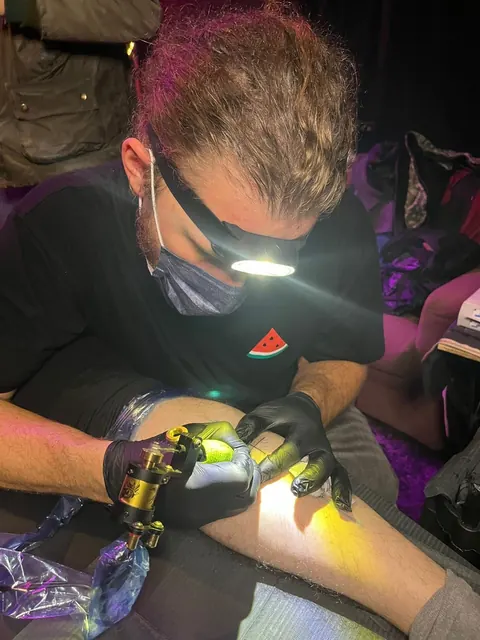
Clean habits matter on both sides of the needle. The gloves, single-use needles, and wrapped machine I wrote about in how I started tattooing protect the skin during the work; once the covering comes off, keeping it clean is your job.
Tattoo aftercare steps: washing gently
Washing is where people get either too timid or too rough. Skip it, and dried plasma and ointment build up on the wound. Scrub it, and you irritate skin that is trying to close. Unless your artist says otherwise, wash gently twice a day through the first weeks, like this:
Placement changes how easy this is: a forearm is simple to wash at the sink, the middle of your back is not. It changes the healing too, since small tattoos on the hands, wrists, or arms heal faster than large ones across the chest or back. One more reason to read my guide to tattoo placement and pain before you choose a spot.
- Wash your hands before you touch the tattoo, every time.
- Use warm water, never hot, and a mild soap with no fragrance or dyes.
- Spread the lather with clean fingertips only, no sponge or washcloth.
- Rinse until the skin no longer feels slippery, then go straight to drying.
Drying and moisturising in thin layers
Pat the tattoo dry with a clean paper towel. Don't rub. Let the skin dry fully before anything else goes on.
Then comes the moisturiser, the step people most often overdo. Choose something simple and unscented, and spread a layer so thin the skin looks soft rather than shiny. Twice a day is enough. A thick coat doesn't heal anything faster; it just sticks to your clothes. I'd also skip petroleum jelly unless your artist asks for it, since it can block pores and has been linked to fading.
Tattoo aftercare timeline: healing week by week
The first week is the wet stage. Expect redness, some swelling, soreness a lot like a graze, and a little fluid that may carry ink with it. Keep washing and moisturising, and let your body do the rest.
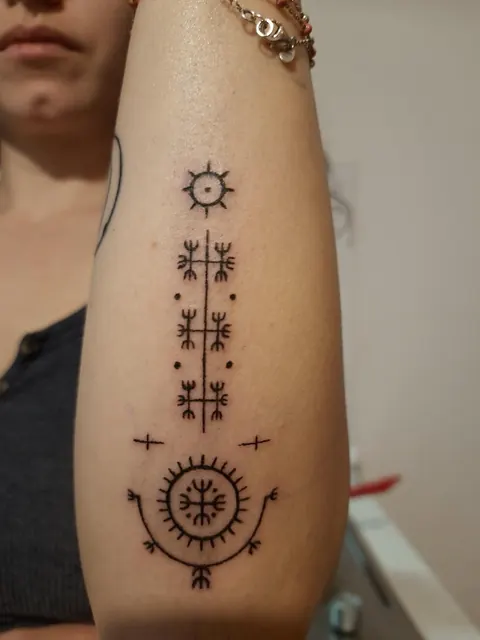
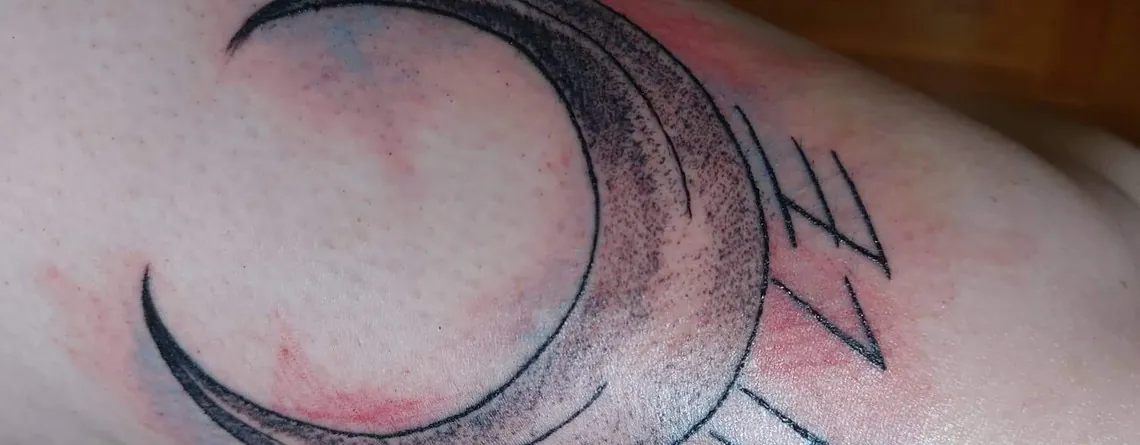
Within the first two weeks, itching and flaking arrive. The tattoo peels like sunburnt skin, and the colour underneath looks dull for a while. Don't scratch, and don't pick the flakes, not even the loose ones hanging by a corner: let them fall on their own. When the itch gets loud, your usual thin layer of moisturiser calms it. On dotwork and ornamental tattoos, where the shading is built from small dots, that patience is part of the drawing.
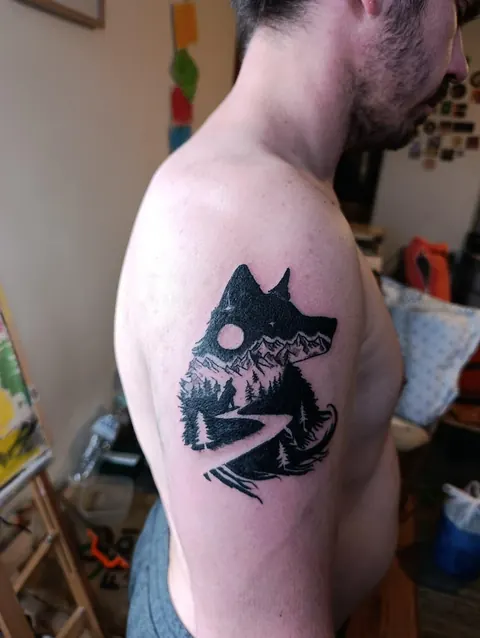
By about the third week, the scabs and flakes settle down. Most people call the tattoo healed then, and on the surface it looks the part. Underneath, the outer layer of skin needs around two months and the deeper layers several more, with larger pieces at the slow end. A big blackwork tattoo with solid fills covers a lot of skin, so give it that time before you judge the black. From about the fifth week, you can ease off the twice-daily washing and moisturise whenever the skin feels dry.
What to avoid while your tattoo heals
Plenty of aftercare trouble comes from doing too much, or from one ordinary summer habit. Until the skin has fully healed, keep these four away from your tattoo:
If fabric does stick to the tattoo, overnight on a sheet for example, don't pull it off. Wet it with warm water and wait until it lets go.
- Soaking: no baths or hot tubs, because a healing tattoo should stay out of the water.
- Swimming: pools, the sea, lakes, and rivers can all wait until the skin has closed.
- Sun: keep the tattoo out of direct sunlight and under loose clothing, and save sunscreen for after it heals.
- Tight clothing: waistbands, straps, and snug sleeves rub fresh skin and stick to it, so wear loose, breathable fabric.
Long-term sun care for colour and fine lines
Once the tattoo has healed, sunscreen becomes part of caring for it for good. Ultraviolet light fades some inks, so the standard advice for tattooed skin is a broad-spectrum, water-resistant sunscreen of SPF 30 or higher. Apply it about 15 minutes before you go out, reapply at least every two hours outside, and skip tanning beds and sunlamps entirely.
Some styles show the sun sooner than others. To my eye, thin lines and soft colour have less ink to spare, so fading shows on them first. If you wear fine line tattoos or colour and watercolour pieces, shade and a light shirt on a long day outdoors are worth as much as the bottle.
Signs that need a doctor
Healing is uncomfortable, but it should get better week by week, never worse. Watch for redness that keeps spreading, red streaks moving away from the tattoo, or skin that feels hot. Pus, a bad smell, pain that grows instead of fading, a fever, or chills belong on the same list. If you notice any of them, see a doctor promptly; tell your artist too, but a doctor is the one who should examine it.
Allergic reactions are a separate matter and can appear at any time, even years later. Red ink is a common culprit, though any colour can cause one. A mild rash or itchy bumps that last longer than a week or two call for a dermatologist. Trouble breathing, a racing heart, strong swelling, or hives are an emergency: get medical help straight away.
The last layer is patience
Aftercare is quiet, repetitive work. A gentle wash, a pat dry, a thin layer of moisturiser, and the discipline not to scratch: that's most of it, repeated until the skin forgets anything happened. Keep your artist's instructions as your first reference, and use this guide for the reasons behind them.
Want to see how linework, dotwork, and solid black look on skin? My gallery opens with my own tattoos, and my tattoo work page shows how a design comes together before it reaches the skin. If you're planning a design of your own, write to me about a tattoo design, and I'll answer by email.