
Tattooing
Adem Hajdarević2022-02-07T22:49:00+00:00tattooing is now my main work, and I live in Rome, Italy. My current tattoo designs and process are on the Tattoo Artist in Rome page.
Drawing came first for me, long before any needle. As an artist I kept trying new fields, and tattooing caught me more than any of them, because it asks for two things at once: a good drawing and a steady, trained hand. When I wrote the first version of this post in 2022, I had been at it for about two years. I started with no training at all and learned by practicing, again and again.
One thing I understood early: a tattoo follows rules from the first minute to the last. The design, the setup, the machine and the cleanup each have their place, and every step counts, from the start of a tattoo to its end.
Before the first line
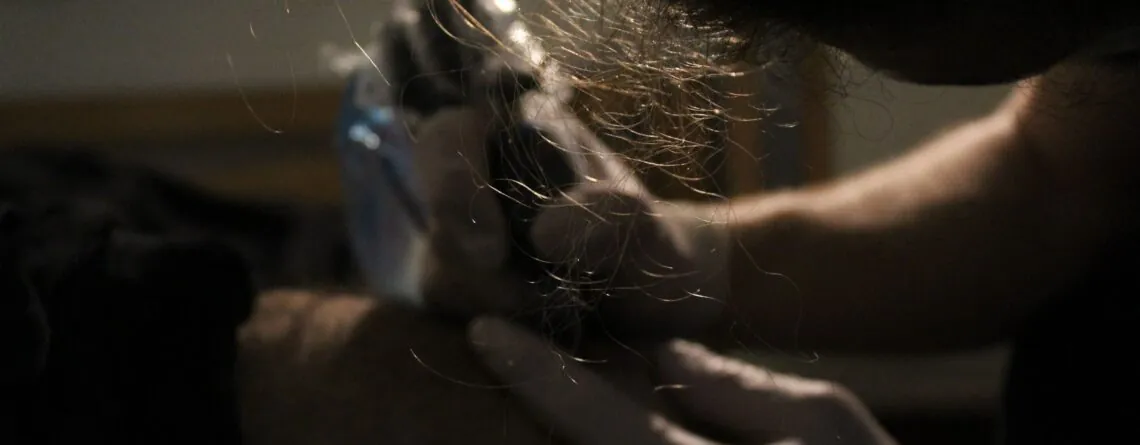
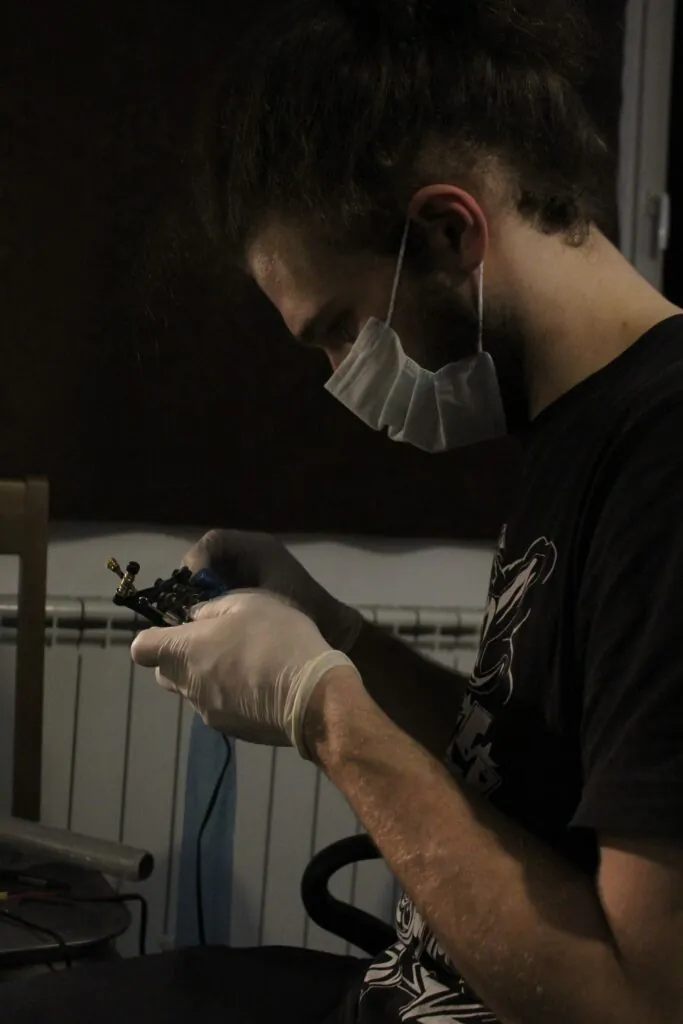
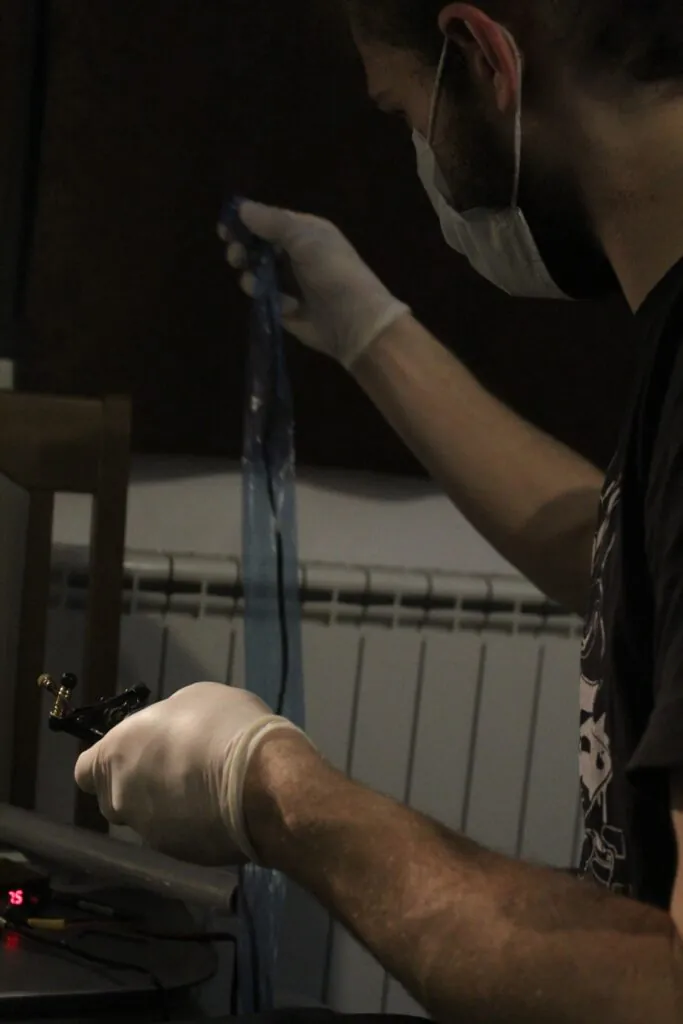
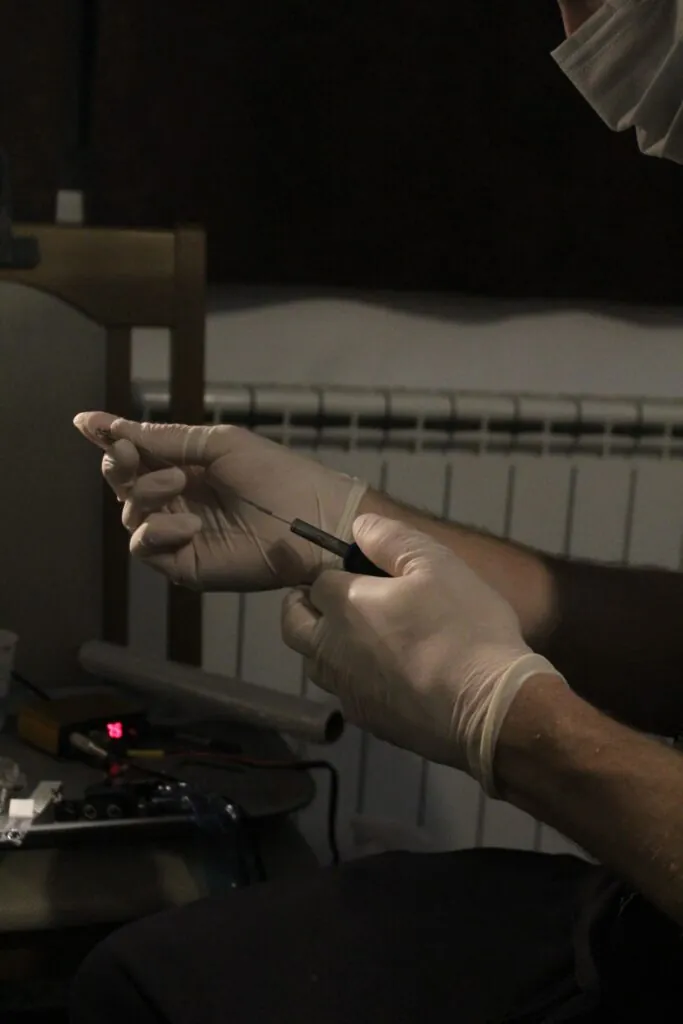
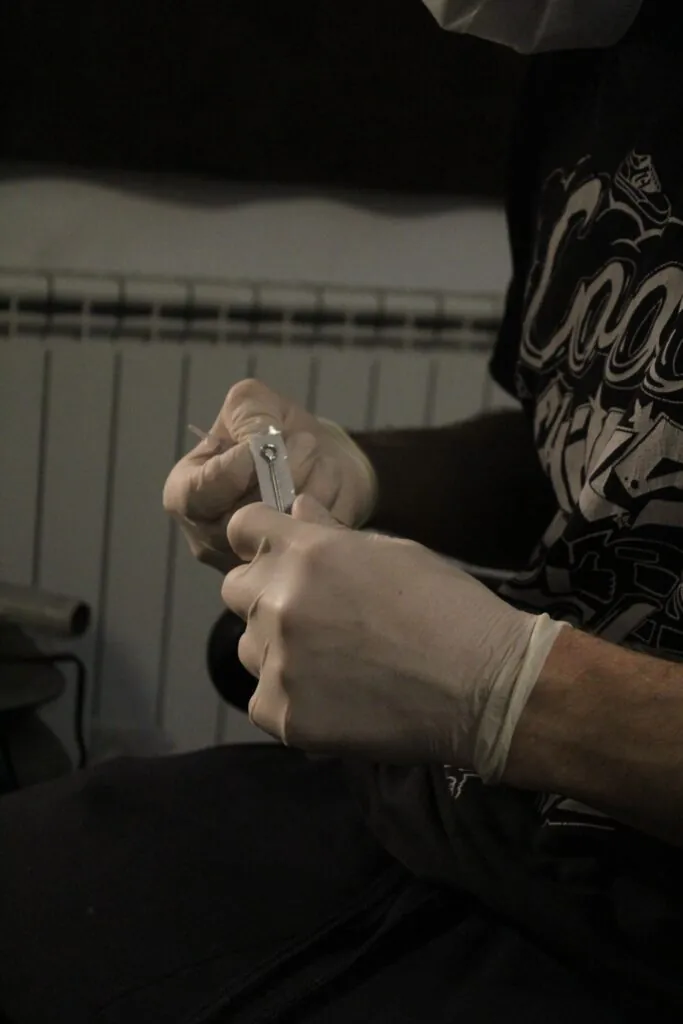
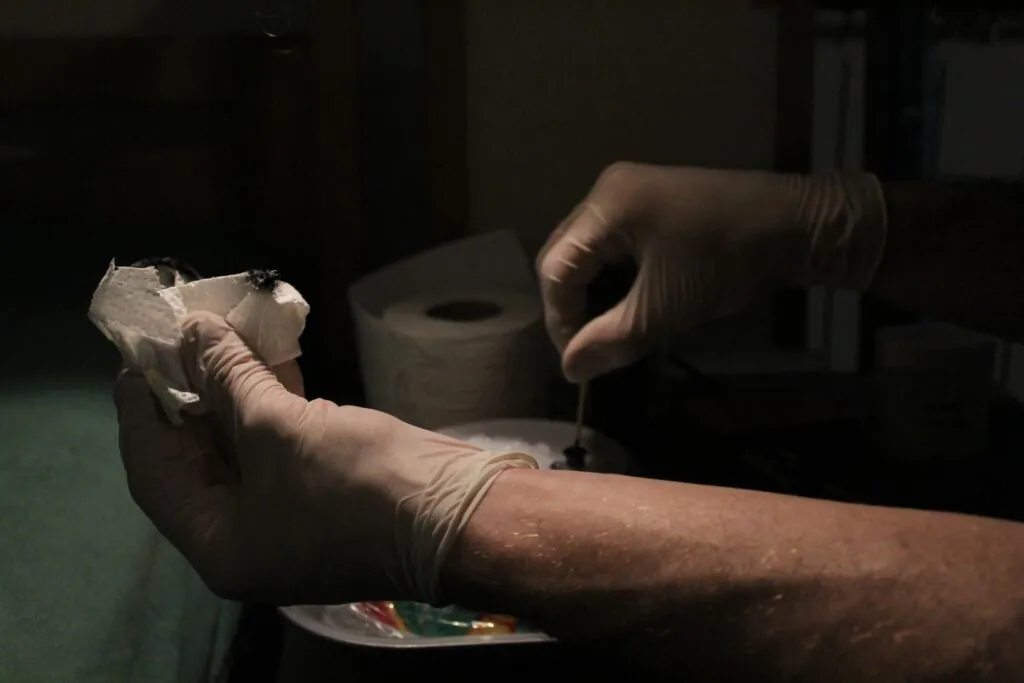
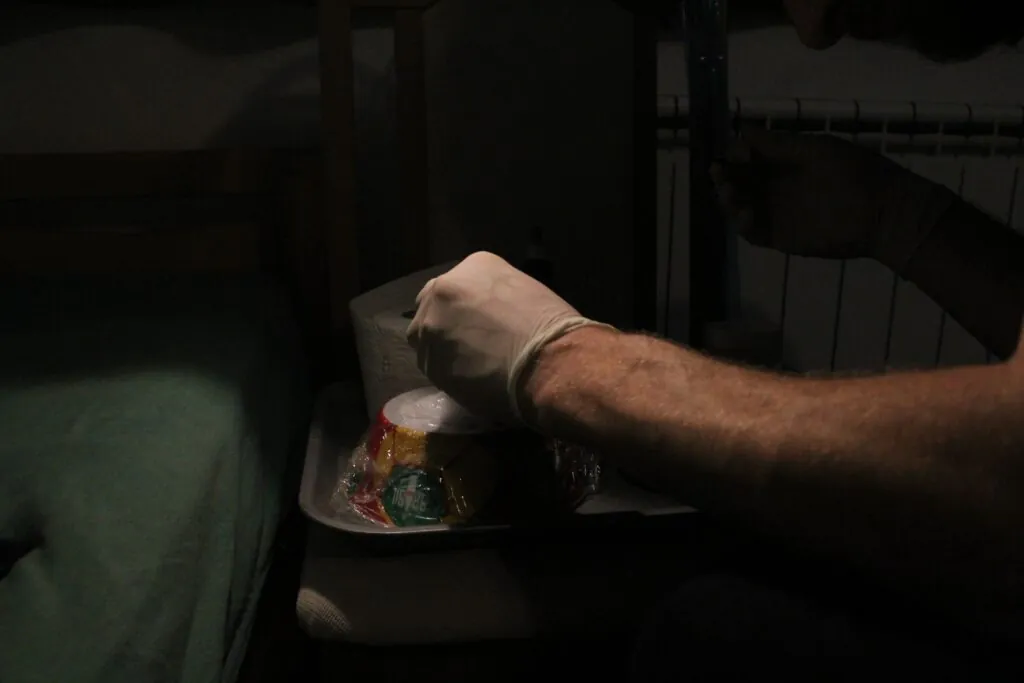
Most of the work happens before the machine touches skin, and that is what the six photos at the end of this post show. I keep a mask and gloves on the whole time. The needle is single-use and comes out of its own package. The tray gets covered, the ink caps go on it, and the machine and its clip cord are wrapped in plastic sleeves so nothing touches them directly.
Hands and the area to be tattooed get washed first. During the work, the skin is wiped with a damp disposable towel, and reusable equipment belongs in a certified autoclave before and after every use. To me, that routine matters as much as the drawing.
Got a fresh tattoo? My tattoo aftercare guide follows the healing day by day, and my first tattoo tips cover what comes before it.
The coil machine on my table
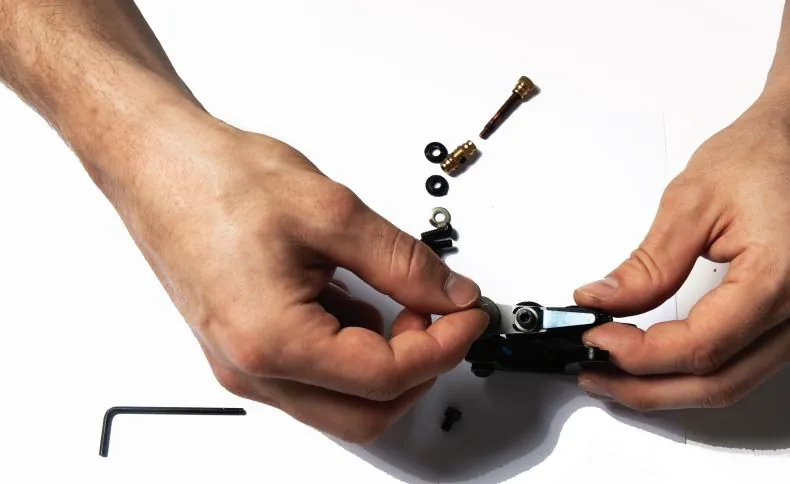
I tattoo with more than one kind of machine, and the coil machine is the one I like to know inside out, so taking one apart, cleaning it and putting it back together is part of the job. The needles are soldered onto a bar connected to an oscillating unit. On a coil machine like the one in my catalog, two electromagnetic coils drive that unit, and the needles go in and out of the skin 80 to 150 times per second.
That habit turned into a design project as well: a photorealistic tattoo machine catalog built around a coil shader, from the first angles to the last screw.
A short history of the machine
In New York in 1891, O'Reilly's machine turned Thomas Edison's electric engraving pen, with its rotary mechanism, into the first electric tattoo machine. Tattooing became cheaper and faster, and working people took it up while the wealthy lost interest. Coil machines came from London. Thomas Riley is credited with the first one, a single-coil machine from 1891, and Alfred Charles South built the first twin-coil machine in 1899, the forerunner of the layout used today.
This post shows where I started. Where I am now, with my current designs and photos of how I work, is on the Tattoo Artist in Rome page.
Leave a Reply Cancel reply