
Fine Line and Linework Tattoos
A fine line tattoo has very little room to hide. With almost no shading to soften a shaky stroke, every line has to land where it was planned, and a bolder linework tattoo asks the same. I am Adem Hajdarević, a tattoo artist and graphic designer living in Rome, and linework is the part of my tattoo work where my design background shows most clearly.
Below are six tattoos I made: symbols in a Nordic style, a red pomegranate, three abstract faces, and a line of script. More of them are in the gallery, where my tattoos come first.
What fine line and linework tattoos are
The thin stroke comes from a single needle or a small, tight group of needles, and everything rests on precision. Shading stays minimal or disappears, so the lines carry the design alone: geometric shapes, abstract line drawings, small symbols, lettering. Linework is the slightly wider family, with lines that can be a little heavier. The image still comes from contours, not from filled areas.
That makes it the opposite of blackwork, where solid black fills whole shapes. In a linework tattoo, the bare skin between the lines becomes part of the drawing.
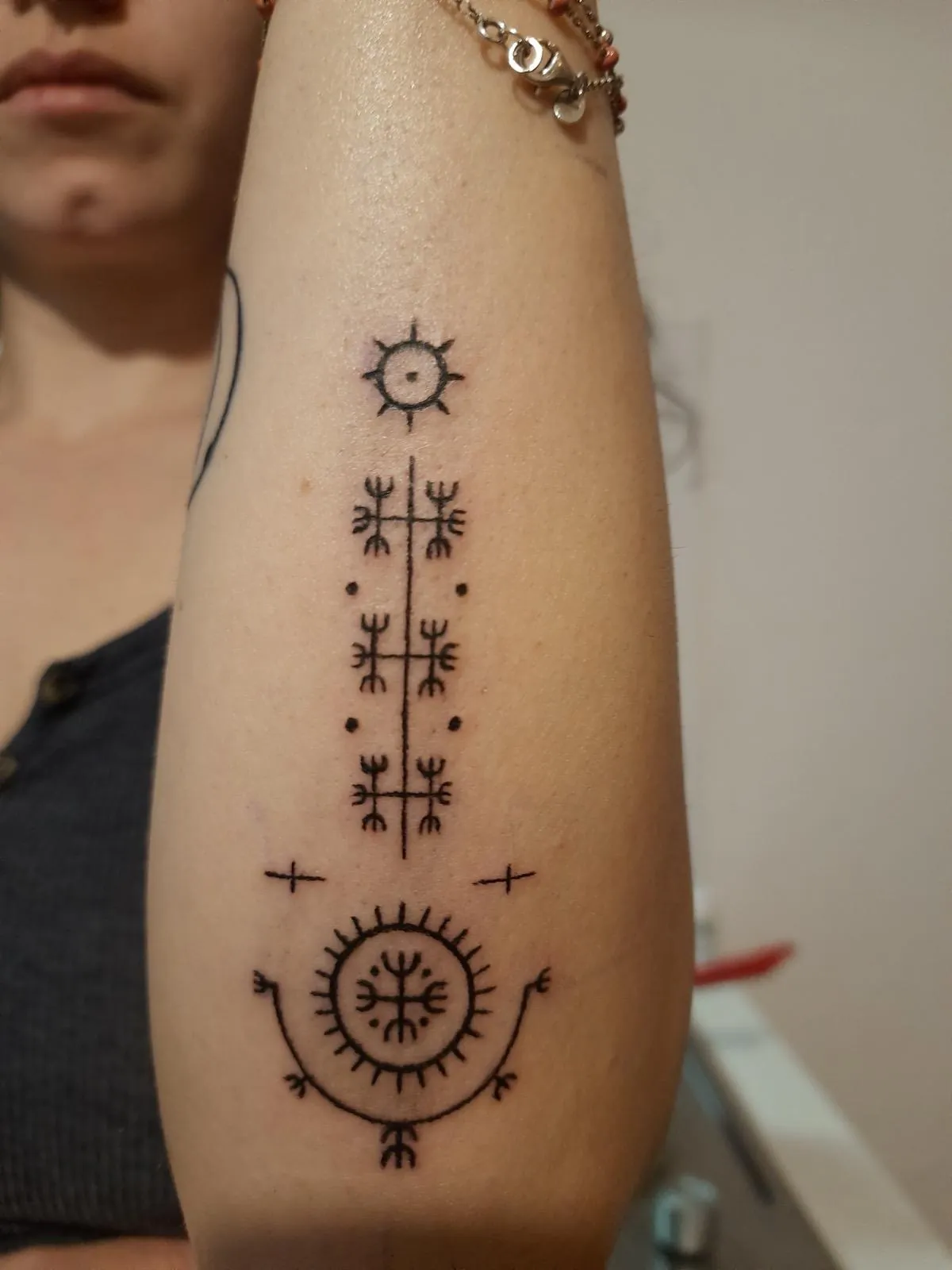
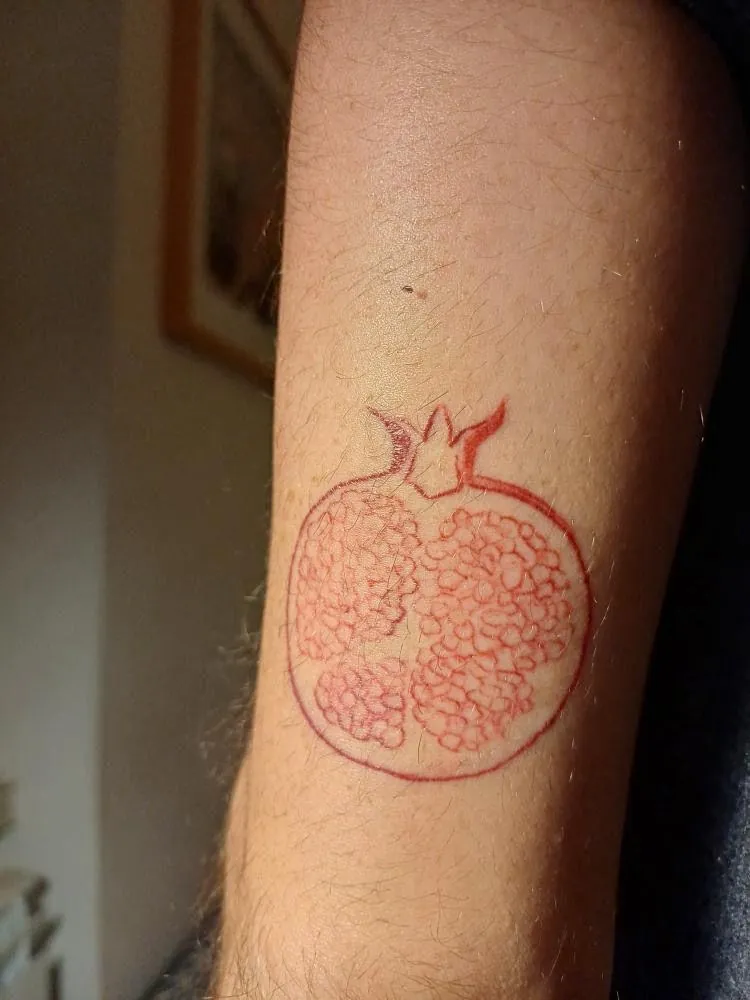
On one forearm, stave symbols in a Nordic style run down in a single column. A small sun sits at the head of it. Below, a vertical line crosses three branching bars, and a round symbol ringed with short strokes closes the column, cupped by a curved line. All black, all thin. The pomegranate went the other way: only red line, with the fruit cut open and every seed drawn as its own small outline.
Abstract faces built from crossing straight lines
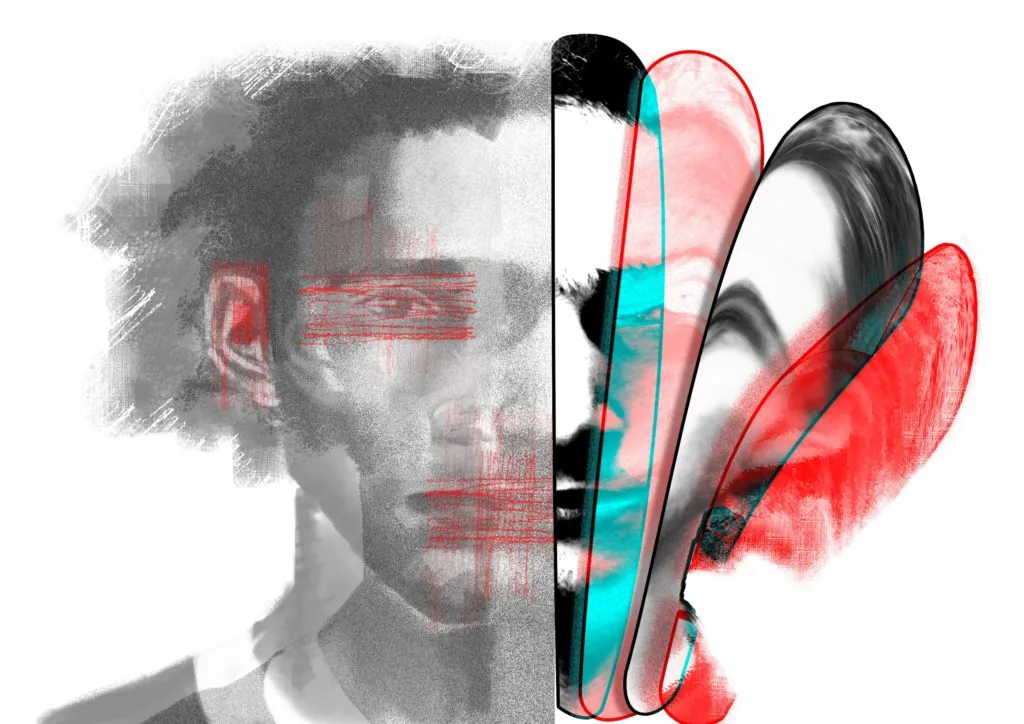
Years of logo design and typography taught me to build an image from a few straight strokes and let the eye fill in the rest. The abstract faces are where that habit and my illustration work meet tattooing. Straight lines cross and overshoot each other until eyes and a mouth appear in the gaps. You can see where this comes from in my design work.
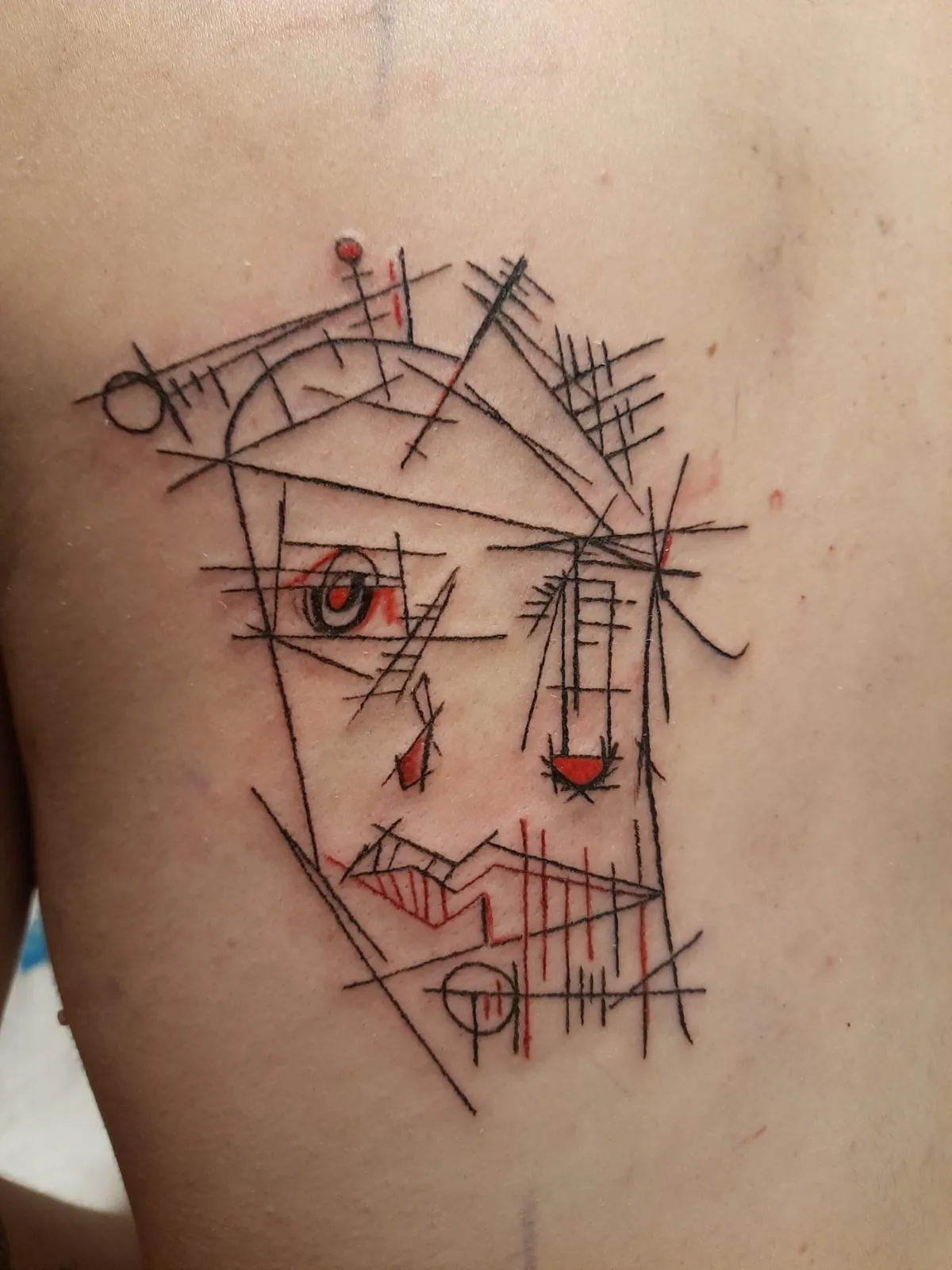
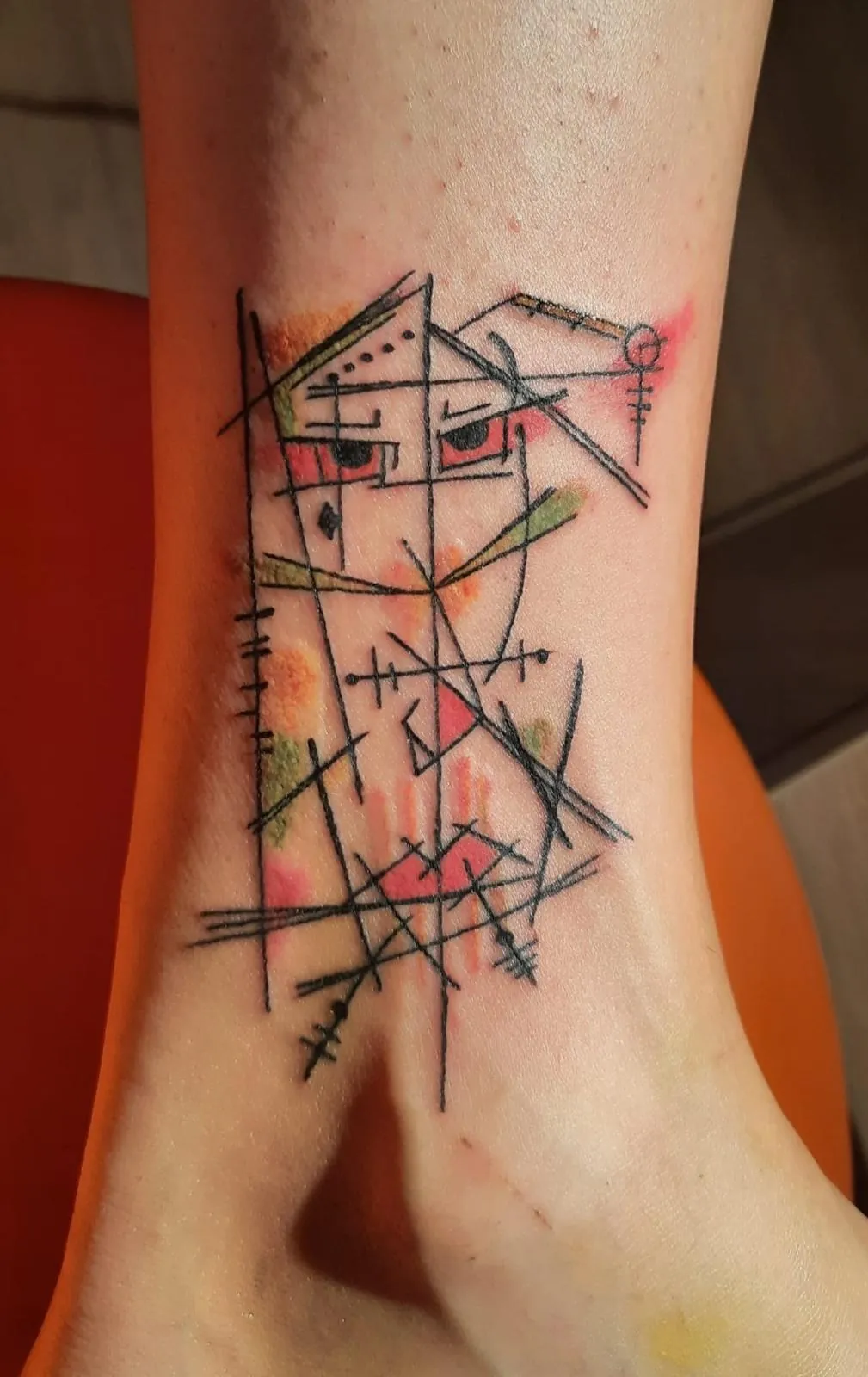
In the first of these faces, black lines cross at sharp angles, and two small circles sit at their ends. Red marks an eye and the nose, then runs in short strokes around the mouth. Without it, the drawing would read as a geometric sketch. With it, the face looks back at you.
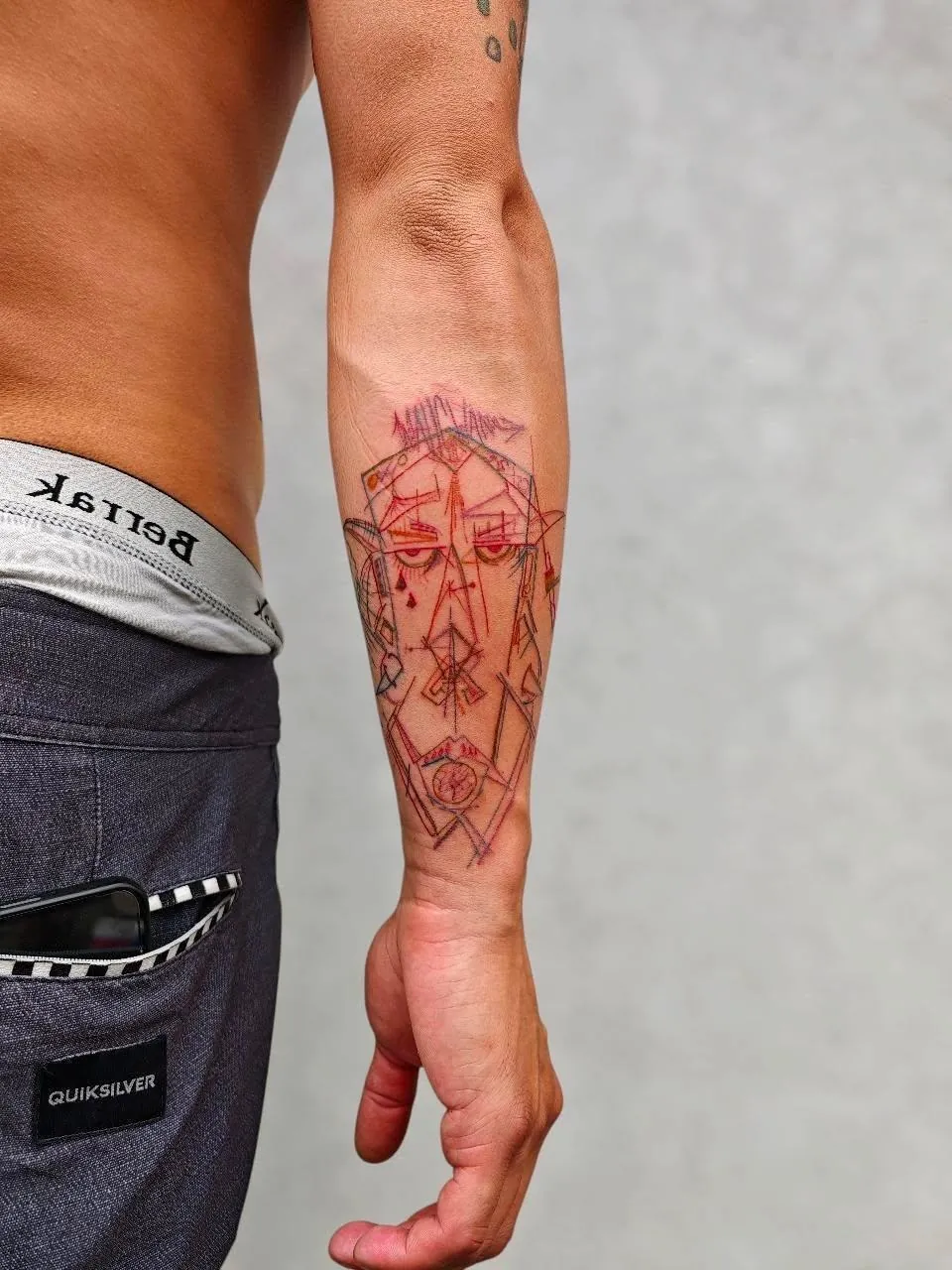
The forearm face goes further. Here the lines themselves are red and warm orange, with a few darker strokes among them, and the face stretches long and narrow along the forearm from just above the wrist.
Just above the ankle, the same kind of face meets colour. Patches of red, yellow, and green sit loosely behind the black lines, closer to watercolour tattoos than to pure linework.
Lettering in thin lines
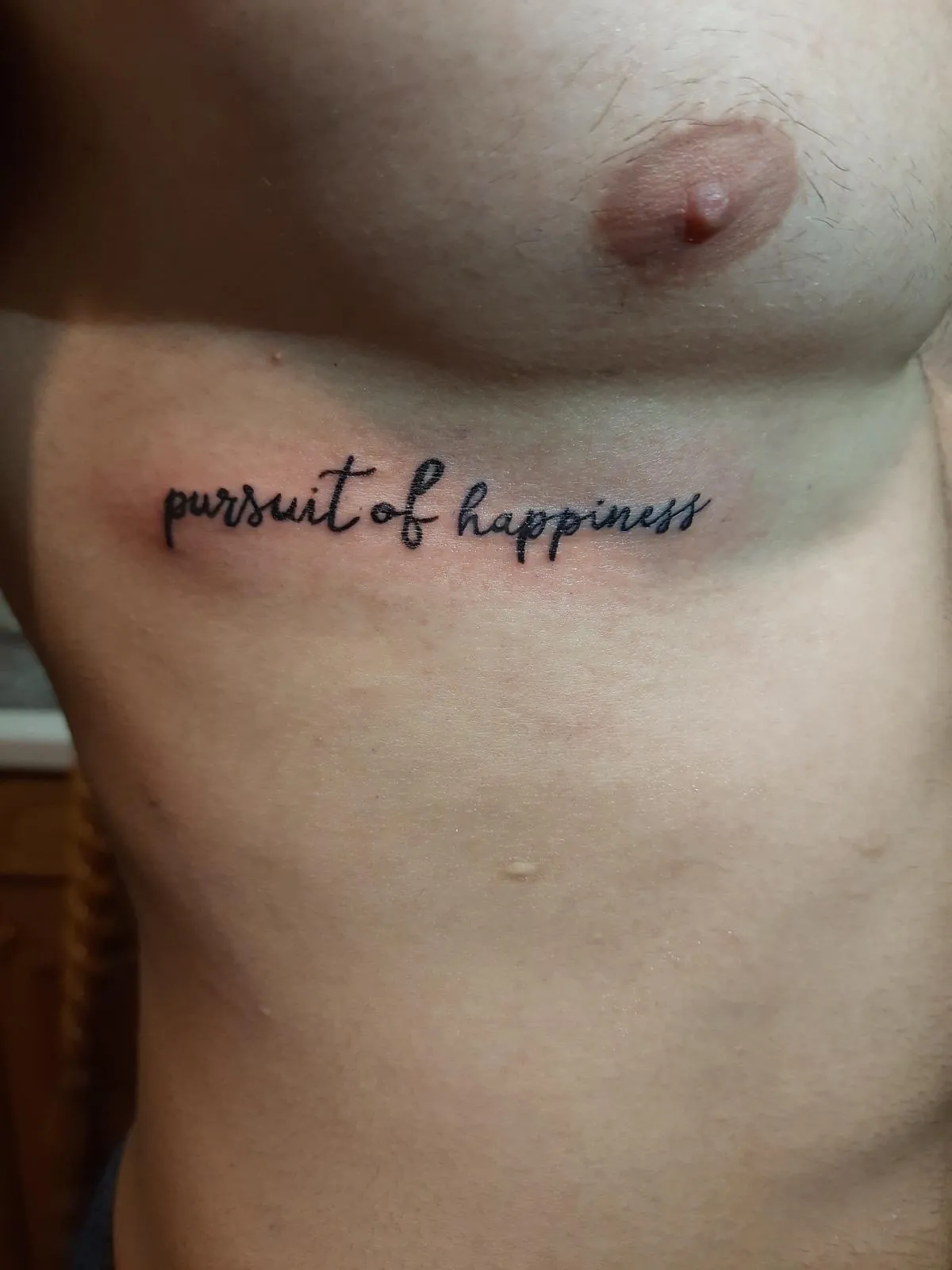
Lettering belongs to linework as well. The script on the ribs reads pursuit of happiness, in lowercase, running as one flowing line along the side of the chest.
Typography was a big part of my design years. A word tattoo has to be readable first, and the spacing between letters matters as much as their shapes.
Size and placement for a fine line tattoo
Thin lines need room. Over the years, ink settles under the skin, and lines drawn very close together can drift towards each other until the detail between them closes up. That is why I suggest a design a little larger than people first picture, or fewer lines at the same size.
Small text is the classic trap. When lettering is tiny, the loops in letters like e and a fill in first, so a word that looks sharp on a phone screen needs more height on skin. A long phrase wants a long stretch of skin, such as the forearm or the ribs.
Placement also changes how a fine line tattoo wears. Hands and fingers are in use all day, and thin lines there tend to fade sooner. Some spots hurt more than others too, which I go through in the guide to tattoo placement and pain. Not sure about the size? Send me your idea and we can work it out on paper first.
How fine lines heal and age
Fine lines heal like any other tattoo. The skin starts out sore and red, then flakes and itches as it settles, and the lines may look slightly cloudy until it does. Leave the flakes alone. My tattoo aftercare guide covers the steps, but the instructions of the artist who tattooed you come first. If you notice signs of infection or an allergic reaction, see a doctor.
Over the years, every tattoo softens. Thin lines tend to show it sooner than bold ones, which is one more reason to give them space. Sun is hard on ink, so once the skin has fully healed, sunscreen on the tattoo helps the lines stay crisp for longer.