
Color and Watercolor Tattoos: Bold Fills and Soft Washes
Colour is where my painting and my tattooing meet. A color tattoo can be loud and solid, with saturated fills held inside a black outline. A watercolor tattoo lets the colour drift instead, in soft washes and splashes with no line around them. I make both, and I often mix them in one design.
I am Adem Hajdarević, a tattoo artist and graphic designer living in Rome. Below are six tattoos I made, from a traditional heart to an abstract face with red and yellow splashes. More of my tattoos, and the way I prepare the machine, are on the main tattoo page.
Color tattoos: saturated fills inside a bold outline
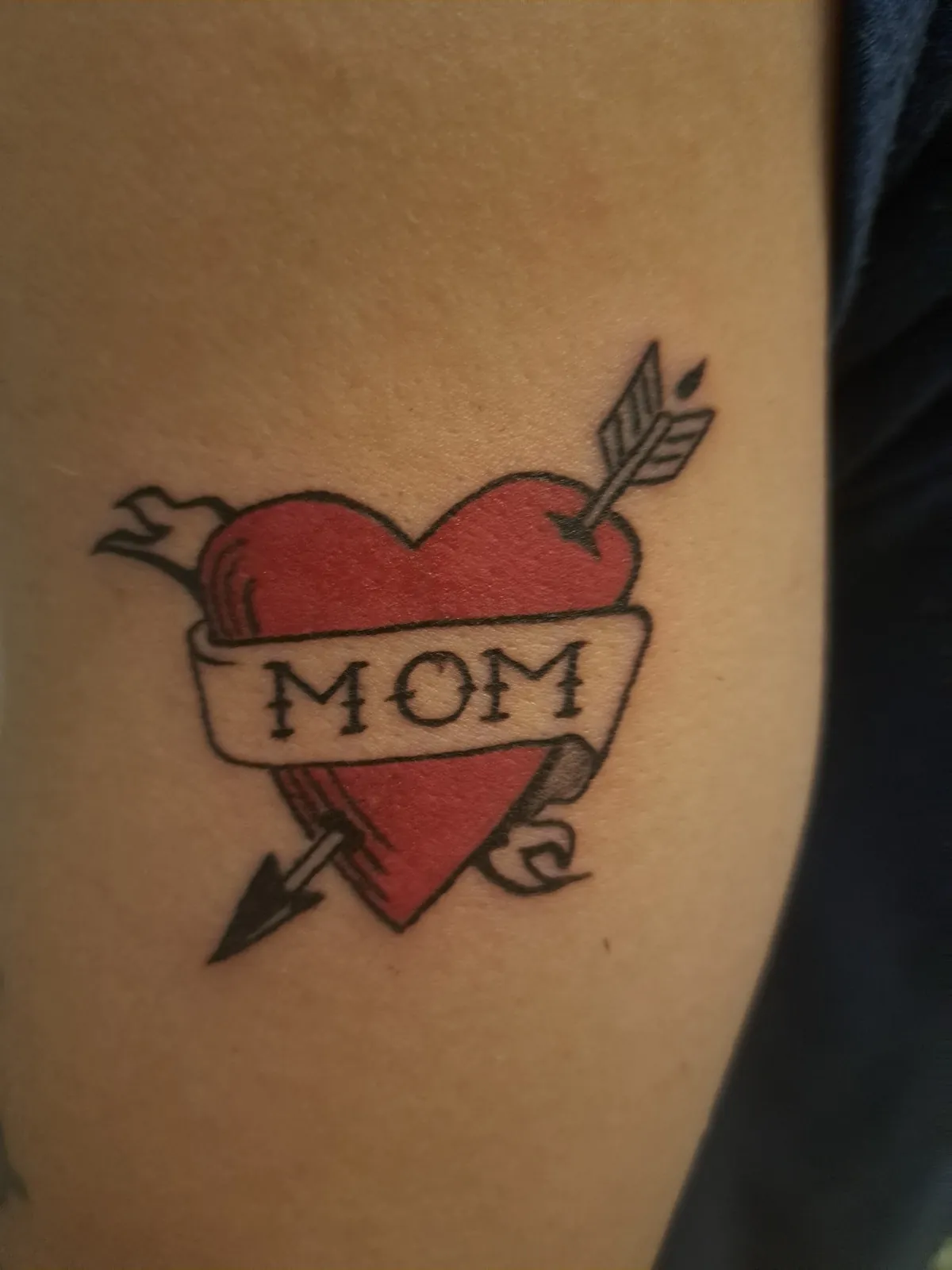
Traditional style shows most clearly what colour can do on skin. The MOM tattoo is a red heart pierced by an arrow, with a banner carrying the word MOM. A thick black outline closes every shape, the red is packed in flat and even, and a few short strokes on its left side give the heart volume.
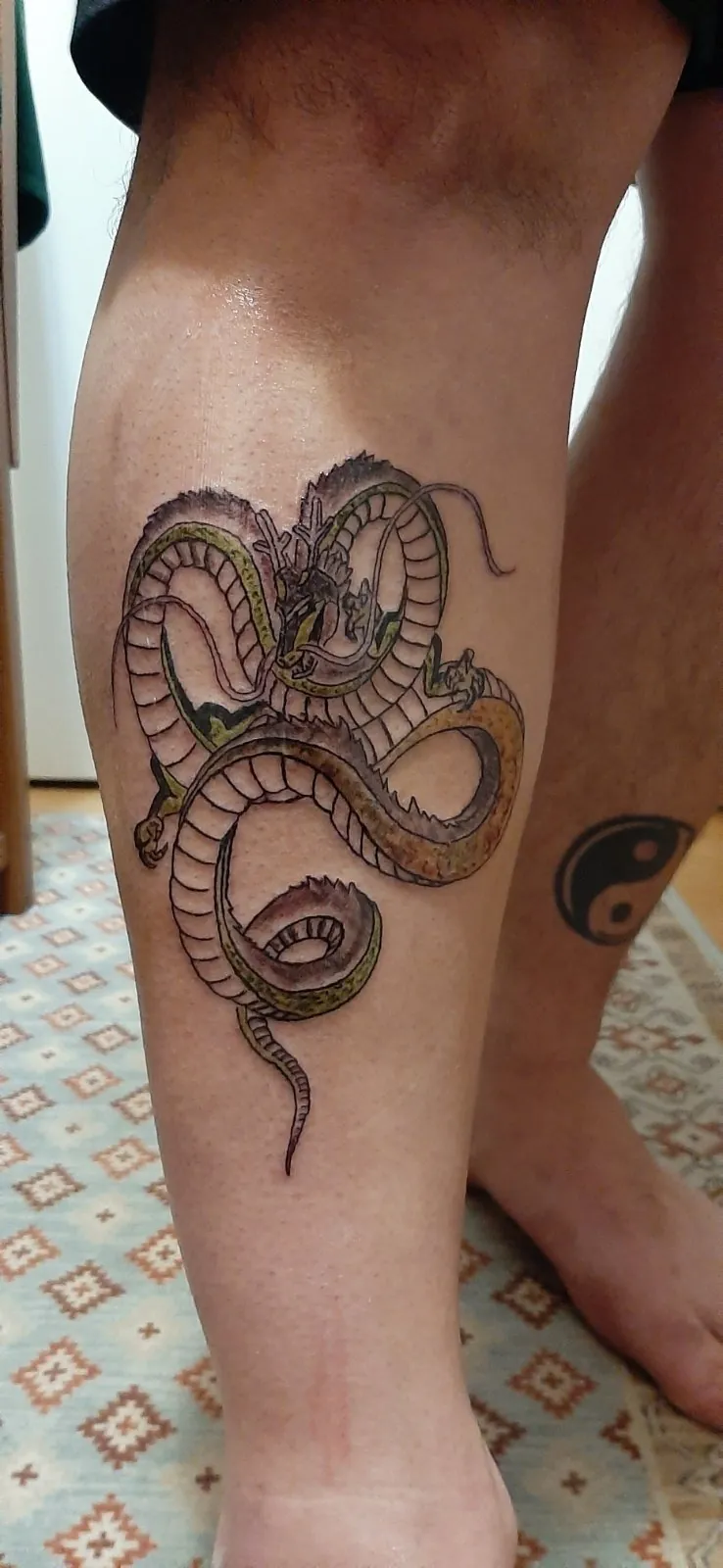
The dragon on the calf works another way. A long serpent dragon winds into loops, whiskers trailing from its head, with olive green and gold scales and brown and grey shading around the coils. The outline is thinner here, so the colour does more of the drawing.
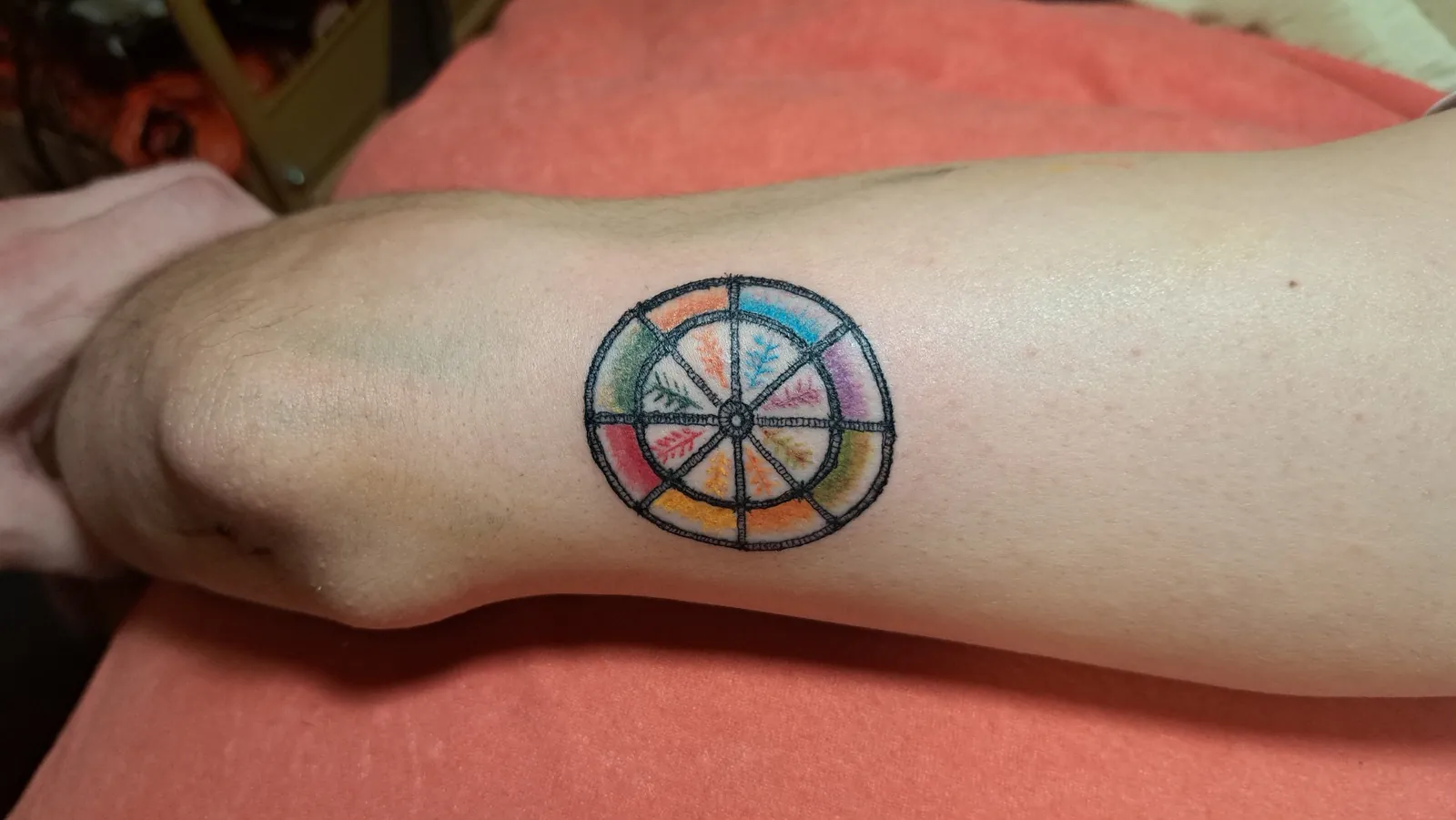
Then there is the small circle on the forearm, split into eight segments like a colour wheel. Each outer segment has its own colour, and the inner ring repeats those tones in tiny sprigs. It sits close to graphic design: structure first, then colour with a job to do.
What a watercolor tattoo looks like
Watercolour on skin borrows the look of paint on wet paper. Colour spreads in soft washes, splashes, and loose strokes, with no hard outline around it, and the edges fade out instead of ending. That freedom is the appeal. It is also why I rarely let colour carry a piece alone.
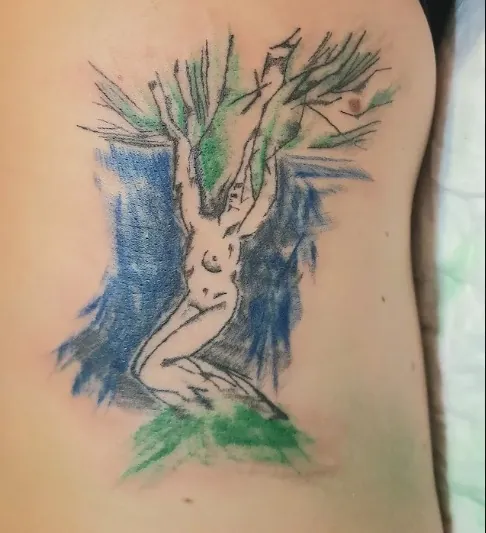
Take the woman in the tree. A nude figure rises out of a trunk, her raised arms turning into branches, all in quick sketch lines. Loose blue strokes fill the space behind her, and green brushes through the branches and the ground. The lines tell you what you are looking at, and the colour sets the mood.
Watercolour with linework, sketch lines, and dotwork
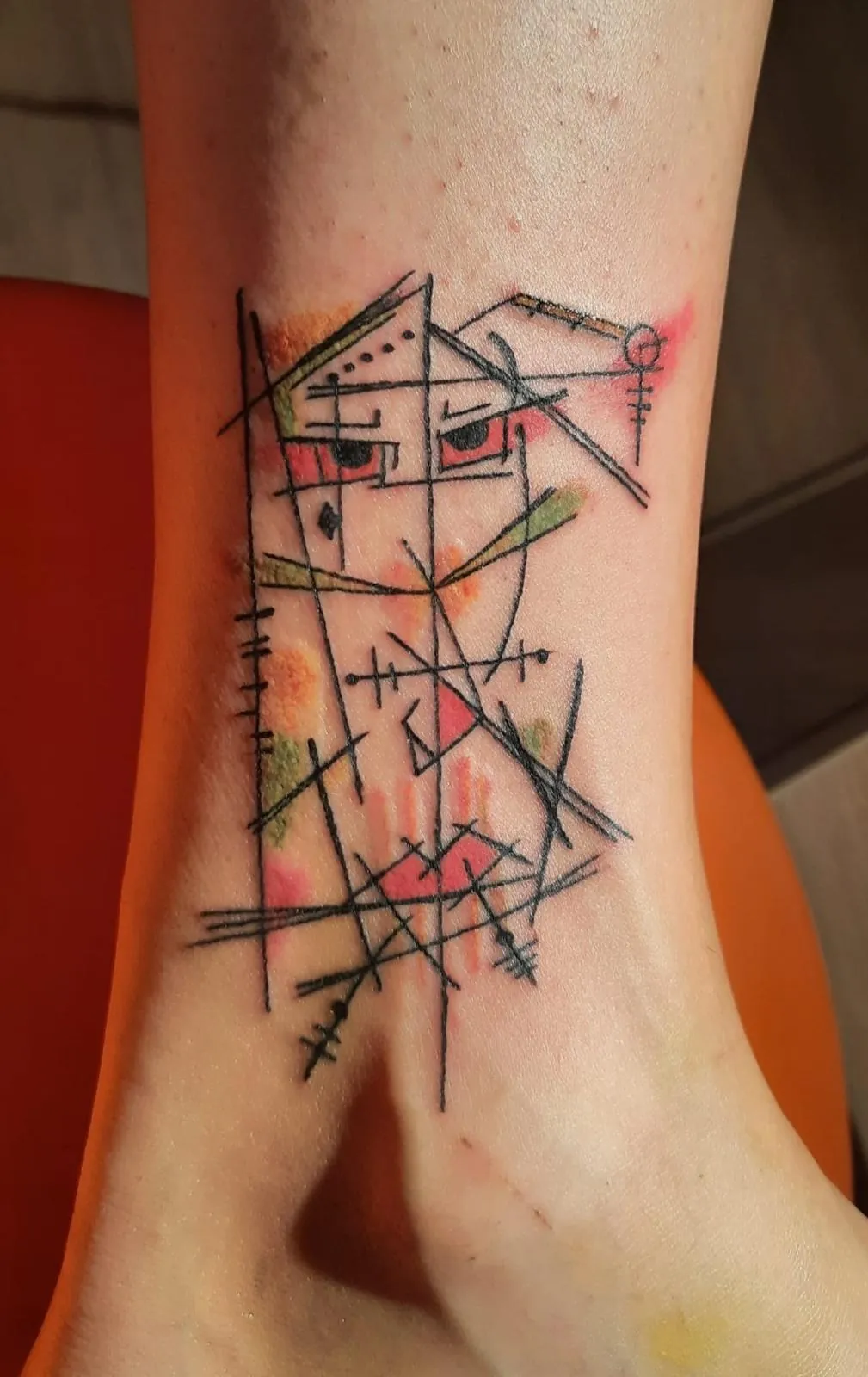
My watercolour pieces usually start as linework. The abstract face above the ankle is built from straight lines that cross and break, with two eyes and a scatter of dots and ticked marks. Patches of red, orange, and yellowish green ignore the lines a little, so it feels like a drawing coloured by hand. For cleaner lines, see my fine line and linework tattoos.
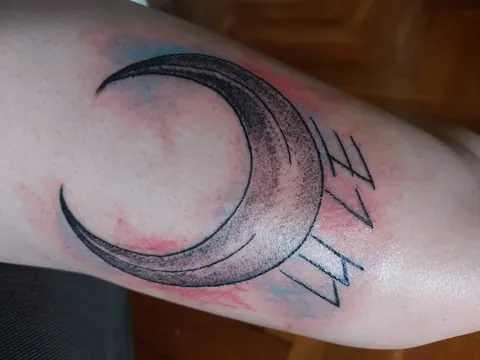
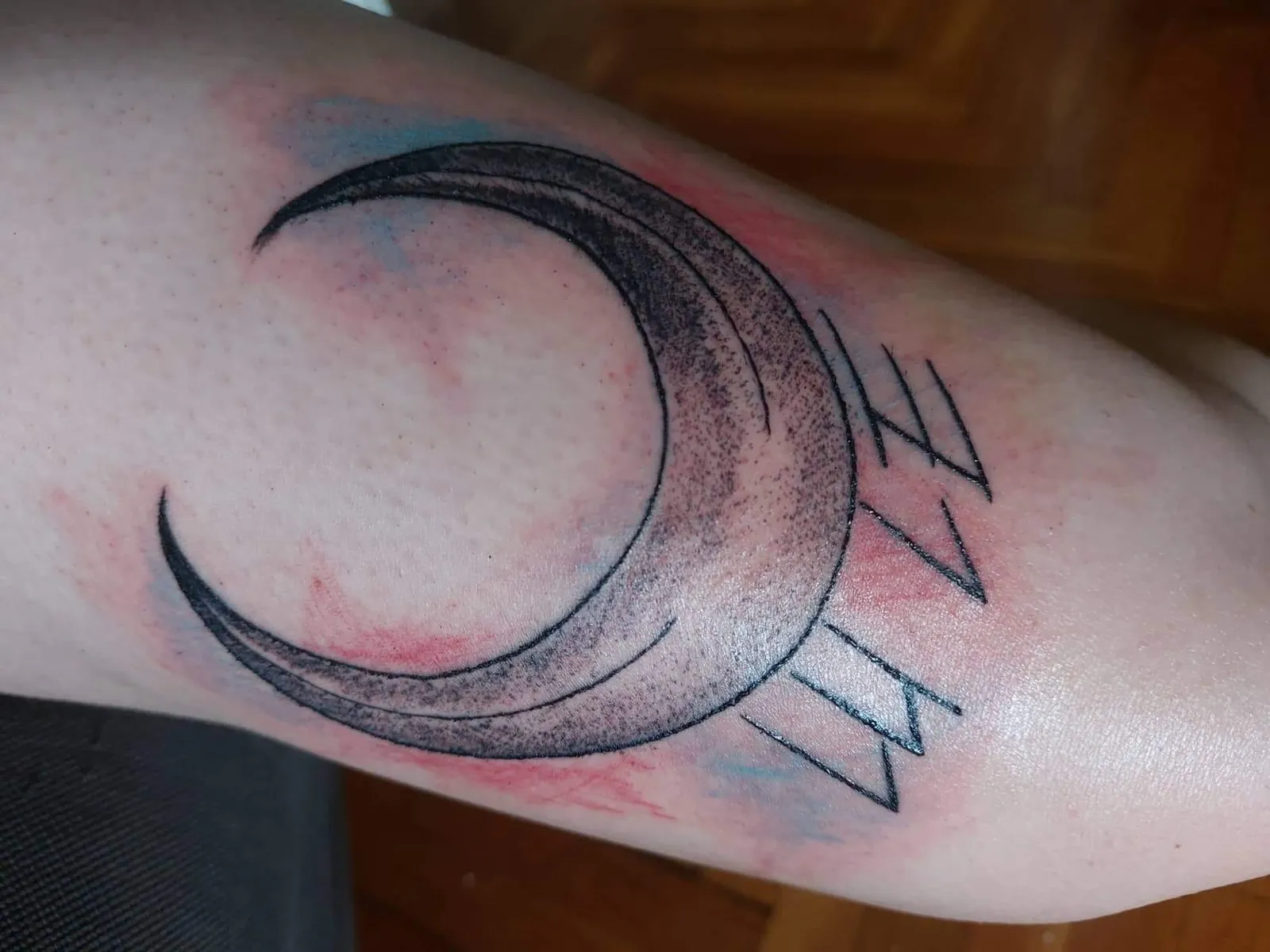
On the crescent moon, three techniques share the space. Dotwork shades the moon, thickening and thinning across the curve, with extra lines following its edge. Small linework symbols sit beside it, and a pink and pale blue wash spreads behind like a sky. Because dots and lines hold the form, the wash can stay soft. More stippled shading is among my dotwork and ornamental tattoos.
From paper and paint to skin
Drawing came first for me, and painting sits right beside it. My painting projects include watercolours, such as grey towers among orange and red blossoms, next to many pencil and ink drawings. Paper taught me how colours behave side by side, and how far a soft edge can go before everything turns muddy.
Skin is a different surface, though. On paper, I can let a wash run and see what happens. On skin, I plan where colour sits, where it fades, and which lines will carry the shape once the fresh brightness is gone. The gallery shows both sides of my work: my tattoos first, then photography, drawings, and paintings.
How colour and soft watercolour edges heal and age
Fresh colour and healed colour look different. While the skin repairs itself, a new colour tattoo often looks dull or a little cloudy, and it peels. Follow the instructions of the artist who tattooed you, and read my tattoo aftercare guide. If you notice signs of infection or an allergic reaction, see a doctor.
Over the years, every tattoo softens. Ink settles and spreads a little in the skin, and sunlight fades it, so a healed tattoo still needs sun protection. Pale washes tend to show this sooner than dense black. A watercolour edge keeps drifting outward, and with nothing firm beside it, the shape blurs.
That is where the black line earns its place. An outline, a run of linework, a patch of dotwork, even a few sketchy strokes: any of them holds the design together while the colour around it relaxes. So my watercolour tattoos almost always sit on a frame of lines.